
How to Identify Replica Watches: A Complete Buyer’s Guide

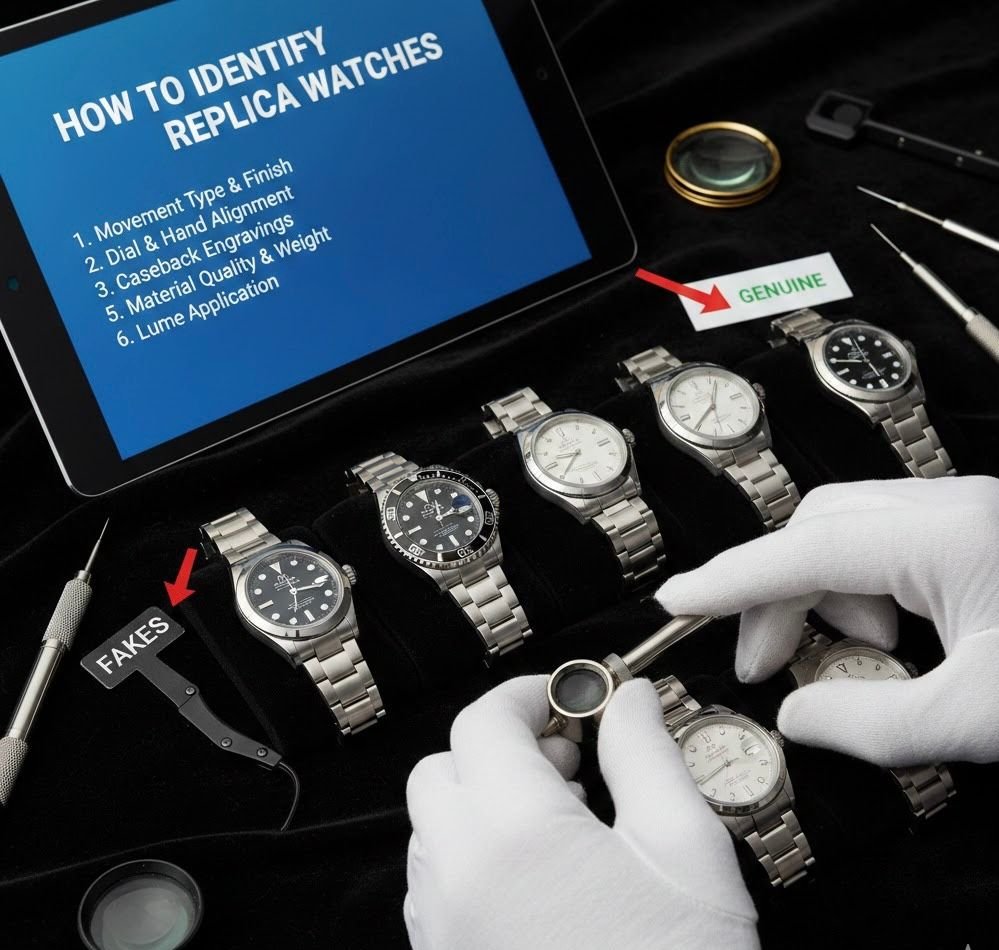
Luxury watches represent craftsmanship, heritage, and precision. Unfortunately, their popularity also makes them one of the most commonly counterfeited luxury items in the world. Replica watches range from obvious fakes to high-grade “super clones” that can fool the untrained eye. Whether you’re a first-time buyer or a seasoned collector, knowing how to spot a replica watch is essential.
This guide walks you through the most reliable ways to identify replica watches and avoid costly mistakes.
1. Check the Price: If It’s Too Good to Be True, It Probably Is
One of the biggest red flags is price.
Authentic luxury watches from brands like Rolex, Omega, Patek Philippe, or Audemars Piguet rarely sell at massive discounts—especially new models. If a seller offers a “brand-new” watch for 50–80% below retail, chances are it’s a replica or at best a counterfeit with modified parts.
Tip: Compare the asking price with official retail prices and reputable secondary-market platforms.
2. Examine the Craftsmanship Closely
Luxury watches are known for flawless finishing. First copy watches Mumbai often look convincing from a distance but reveal issues upon close inspection.
Look for:
- Uneven or sloppy engraving
- Rough edges on the case or bracelet
- Poorly aligned hour markers
- Loose bezels or rattling parts
Authentic watches feel solid and precise. Nothing should look rushed or cheaply made.
3. Inspect the Dial Details
The dial is one of the hardest parts for counterfeiters to replicate perfectly.
Pay close attention to:
- Font accuracy: Logos, numbers, and text should be sharp and consistent.
- Spacing and alignment: Letters and markers should be perfectly centered.
- Lume quality: On genuine watches, lume is evenly applied and glows consistently.
Even small spelling errors or misaligned text are clear indicators of a replica.
4. Verify the Movement
The movement is the heart of the watch—and one of the biggest giveaways.
- Luxury watches use high-quality mechanical movements that sweep smoothly.
- Many replicas use cheaper quartz or low-grade automatic movements.
- A ticking second hand on a model known for a smooth sweep is a major red flag.
If possible, have a watchmaker open the case back to inspect the movement. Authentic movements feature brand-specific engravings and superior finishing.
5. Check the Serial and Model Numbers
Authentic watches have unique serial and model numbers engraved cleanly and precisely.
What to watch for:
- Shallow or poorly etched numbers
- Repeated serial numbers across multiple watches
- Numbers that don’t match the brand’s database or paperwork
You can often verify serial numbers through authorized dealers or brand service centers.
6. Evaluate the Weight and Materials
Luxury watches are made from premium materials such as solid stainless steel, gold, platinum, or ceramic.
Replica watches may:
- Feel lighter due to hollow components
- Use plated metals instead of solid materials
- Show premature wear or discoloration
If the watch feels unusually light or flimsy, that’s a warning sign.
7. Inspect the Bracelet and Clasp
Bracelets and clasps are common weak points in replicas.
Authentic watches feature:
- Smooth, flexible bracelet links
- Secure clasps with precise engravings
- No sharp edges or loose components
On replicas, clasps may snap shut poorly, engravings may be shallow, and links may feel stiff or rattly.
8. Review the Packaging and Documentation
While packaging can also be faked, it still provides clues.
Red flags include:
- Poor-quality boxes or incorrect branding
- Missing warranty cards or manuals
- Generic paperwork without serial matching
Authentic watches typically come with high-quality packaging and documentation that matches the watch exactly.
9. Research the Seller Thoroughly
Where you buy matters just as much as what you buy.
Be cautious of:
- Social media sellers with no verifiable history
- Websites without physical addresses or customer support
- Sellers who refuse third-party authentication
Stick to authorized dealers, well-known marketplaces, or sellers who offer authentication guarantees and return policies.
10. Get Professional Authentication
When in doubt, consult an expert.
Professional watchmakers, authorized service centers, and third-party authentication services can confirm whether a watch is genuine. This step is especially important for high-value purchases.